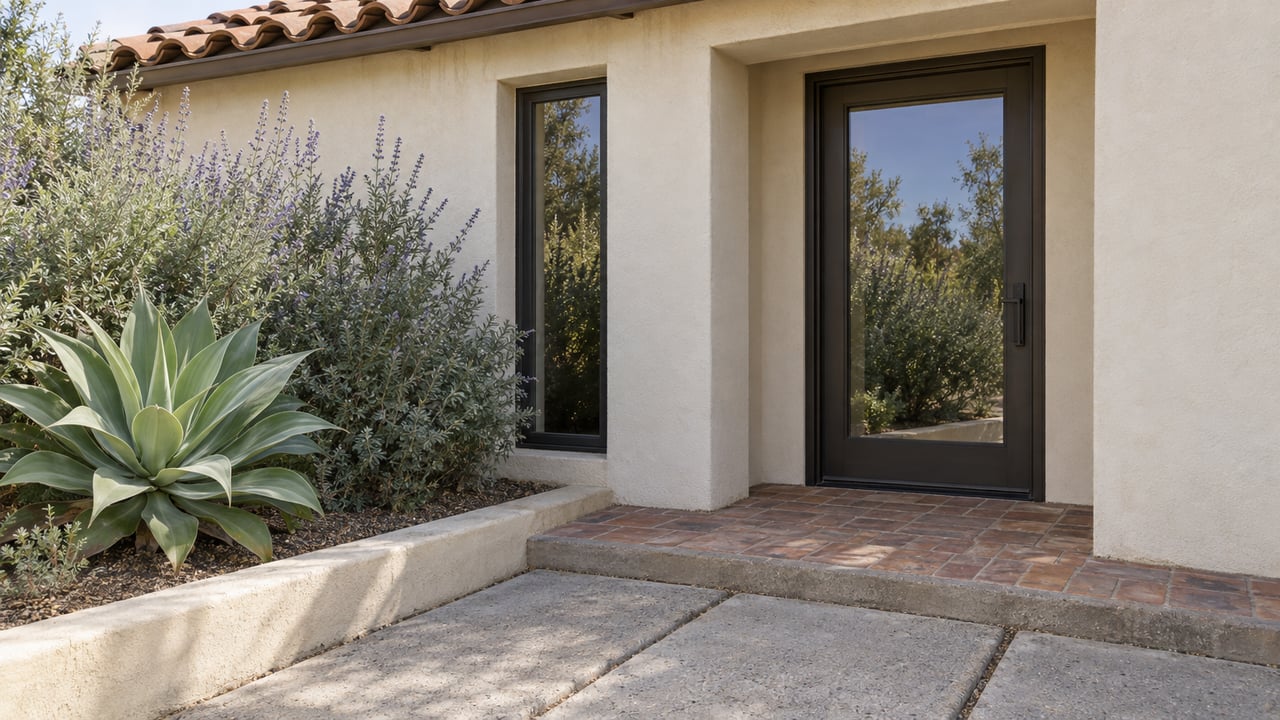
On a Tuesday afternoon, Los Rios Street is about as quiet as a place gets. A handful of visitors linger near the Tea House. A dog walker cuts through Los Rios Park. Most of the forty-some homes along the street are private residences, their porches and gardens facing a narrow lane where cars still have to slow down for pedestrians who wander into the road without looking. It is, on paper, the oldest continuously occupied residential street in California, home to three adobe structures dating to 1794. In practice, it mostly reads as a nice place to take out-of-town guests before lunch.
Twice a year, for two nights only, that changes. The San Juan Capistrano Historical Society turns the same stretch of adobes and cottages into a paid, ticketed, costumed storytelling walk. Guides in period dress meet groups at the O'Neill Museum and lead them past the same houses that sit quiet the other 363 days of the year, telling stories that residents don't put on their own walking tours: a black dog with red eyes, a woman in white, restless spirits tied to specific addresses on the block.
What most people miss, including some who have lived nearby for years, is that the tour doesn't happen on a fixed weekend. If you're going by memory of when it ran last year, you can end up a full week off.
A Date That Moves With Halloween, Not With the Calendar
In 2021, when Halloween fell on a Sunday, the tour ran the Friday and Saturday right before it, October 29 and 30. In 2025, with Halloween landing on a Friday, the tour ran a full week earlier, October 24 and 25, which local coverage at the time described as happening a week before Halloween itself. This year, with Halloween falling on a Saturday, the Mission's own downtown calendar lists the tour for October 23 and 24, again a week ahead rather than on Halloween weekend proper.
The pattern across those three years:
- 2021: Friday–Saturday, Oct. 29–30 (Halloween fell Sunday, Oct. 31)
- 2025: Friday–Saturday, Oct. 24–25 (Halloween fell Friday, Oct. 31)
- 2026: Friday–Saturday, Oct. 23–24 (Halloween falls Saturday, Oct. 31)
There's no single formula that predicts the exact dates from Halloween's day of the week alone, and the organizers likely have their own reasons tied to actor schedules, venue bookings, and not wanting to compete with actual trick-or-treating. What's consistent is that the tour is never simply "the last weekend of October." Anyone planning around it needs to check the current year rather than repeat what worked last time. For 2026, that means Friday, October 23 and Saturday, October 24.
What the Ticket Actually Buys
The walk starts at the O'Neill Museum, the Garcia/Pryor House at 31831 Los Rios Street, an 1870s building that now serves as the Historical Society's headquarters. From there, groups head out in staggered departures, with the event's own ticketing site listing five separate time slots each night so visitors can pick a slot rather than show up for one fixed start time. Last year, tours ran roughly every half hour between 6:30 and 8:30 p.m.
The stories along the route stay local rather than generic haunted-house material. Guides recount tales tied to specific stretches of the street: the black dog with red eyes, the lady in white, and other spirits described as having unfinished business with the neighborhood. The tone is pitched for families. The organizers describe it as all-ages and ask visitors to leave dogs at home for the evening, and both alcoholic and non-alcoholic drinks are sold along the way, with proceeds going back to the Historical Society. Last year's general admission ran $24.50 for adults and $12.50 for children ages 3 to 10, with kids 2 and under free. Current-year pricing is worth confirming directly with the tour before you go, since a year-over-year shift wouldn't be unusual for a small nonprofit event.
The Same Group That Keeps the Adobes Standing
The Historical Society isn't just borrowing the street for a night of theater. It's the organization that runs Los Rios Street's regular Saturday walking tours year-round, the ones where a docent leads visitors past the Montanez Adobe, built in 1794 and one of the oldest structures in the state, along with the Rios and Silvas adobes. Those tours describe themselves plainly: donations support preservation and the Montanez Adobe Museum.
So the ghost tour's ticket revenue and the daytime tour's donation jar both flow into the same small nonprofit, which means the two nights of costumed storytelling in October are, functionally, a maintenance fund for the very buildings the actors are standing in front of. The homes on Los Rios Street carry names tied to the families who lived there generations ago, among them Rios, Lobo, Ramos, Yorba, Labat, and Olivares, according to the district's National Register nomination. Buying a ticket to hear a ghost story about one of those houses is also, in a small way, paying toward keeping that house from falling down.
The Other Ghost Walk on the Same Block
Los Rios isn't the only ghost tour operating in this part of town, and it's worth knowing the difference before you book. Haunted Orange County runs a separate, commercially operated walk called the Capistrano Ghost Walk that also starts among the Los Rios adobes but doesn't stay there. It continues down a dimly lit stretch of Camino Capistrano and ends near the Mission church, where the tour folds in the 1812 earthquake that collapsed the Great Stone Church and killed 42 parishioners, a real event the walk uses as its closing story.
The two tours aren't competing for the same experience. The Historical Society's version is shorter, confined to Los Rios itself, run by volunteers, and structured as a fundraiser for a specific set of buildings. The Haunted Orange County walk covers more ground, leans into a darker tone, and treats the whole downtown core as its stage rather than just the residential street. Neither replaces the other. Picking between them is really a question of whether you want the intimate, kid-friendly version tied to one street's upkeep, or the longer walk that trades some of that intimacy for more history and more distance covered.
Getting There Without Losing Your Parking Spot
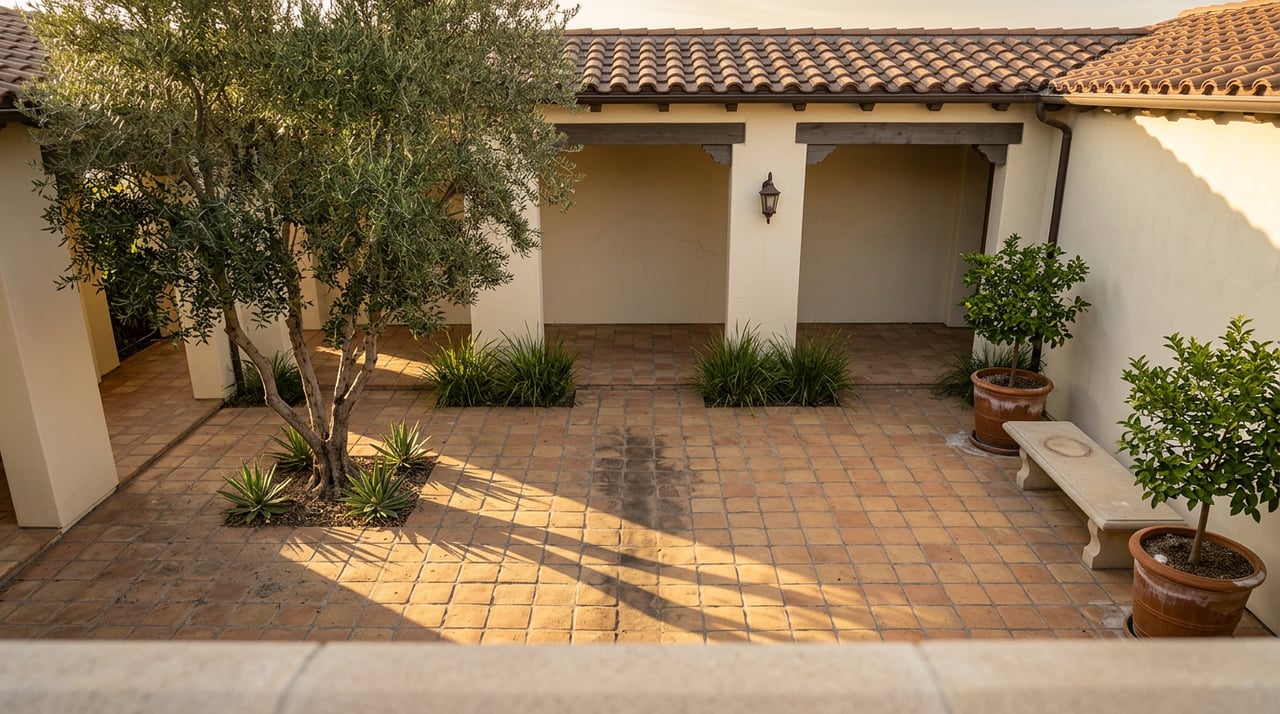
Los Rios sits directly across the railroad tracks from the Capistrano Depot, and the easiest way in on tour nights is the same way locals reach it any other day: park near the depot, either in the paid structure by the front entrance or the free, partially paved lot off Paseo Adelanto on the back side of the district, then cross on foot. The street itself is narrow and lined with mature pepper, eucalyptus, and palm trees, charming to walk but tight enough that cars and pedestrians share space closely, which is worth keeping in mind if you're managing a stroller or small kids after dark.
None of this requires advance planning most other times of year. Los Rios is a two-minute stop for most residents, a place you pass through on the way to the Mission or a quick coffee run. For two nights this October, it's worth treating like an actual destination, both because the story is genuinely local and because the money you spend on a ticket goes toward keeping the block looking the way it has since well before California was a state.
If wandering a street where the houses are older than the country itself sounds like the kind of neighborhood texture you'd want daily rather than twice a year, Zoch Real Estate Group knows San Juan Capistrano's older pockets as well as its newer ones. Use the Instant Home Valuation tool on our site anytime you're curious what a home near this stretch of history is actually worth.