Wondering whether San Juan Capistrano’s older neighborhoods or its newer planned communities are a better fit for your lifestyle? It is a smart question, because this city offers something many South Orange County markets do not: a true mix of historic homes, preservation districts, and newer association-managed neighborhoods. If you are comparing charm, upkeep, parking, commute patterns, and long-term day-to-day livability, this guide will help you sort through the trade-offs with confidence. Let’s dive in.
Why San Juan Capistrano Feels Different
San Juan Capistrano stands out because its housing story is layered. The city’s historic inventory includes the Mission and downtown buildings, the Los Rios Street Historic District, Mission Hill-Mission Flats homes, and several adobe, ranch, and farmhouse resources.
At the same time, the broader housing stock is much newer than many buyers expect. The city’s 2014 Housing Element, using 2010 Census data, reported that about 96% of housing units were built after 1960, while only about 1% were built before 1940. So while the historic homes are highly visible and shape the city’s identity, they make up a small share of the overall market.
That contrast is part of what makes the home search here so interesting. You can find areas with deep architectural character and preservation rules, or choose communities with newer homes, planned amenities, and a more standardized feel.
Historic Neighborhoods in San Juan Capistrano
Los Rios and the historic core
The Los Rios Historic District sits north of Del Obispo Street between Los Rios Street and Paseo Adelanto. The city describes it as one of the oldest residential districts in California, and that age shows up in the streetscape, building materials, and overall atmosphere.
Living in or near the historic core often means a more distinctive setting. It can also mean tighter parking and less flexibility for day-to-day access, since the city notes that Los Rios is both a residential community and a sensitive area where parking is limited.
Historic home styles and visual character
One important point is that “historic” in San Juan Capistrano does not mean one uniform look. The city’s historic resources include adobes, Victorian-era homes, Craftsman-influenced properties, and early wood-frame buildings.
In Los Rios, original structures may feature clapboard or board-and-batten siding, wood shingles or tar-paper roofing, simple wood cornices, wooden window and door frames, and small window panes. That creates a sense of authenticity that is hard to duplicate in newer construction.
Preservation rules and approvals
If you love the idea of owning a historic property, it is important to understand the added process that may come with it. For designated landmarks, the city requires Site Plan Review if an owner wants to alter, add onto, relocate, or demolish the property.
In practical terms, that means exterior changes may involve more review than they would in a typical newer neighborhood. Rehabilitation and additions are generally expected to match original massing, materials, and an earth-tone palette, with adobe, wood, and wrought iron emphasized.
Everyday trade-offs in older areas
Historic ownership often rewards careful restoration rather than broad exterior customization. That can be a major draw if you value architectural integrity, but it can also require patience, planning, and a willingness to work within established design standards.
The city also states that it does not currently spend public funds to rehabilitate or maintain privately owned landmarks. Some owners may be eligible for Mills Act tax relief and other preservation-related benefits, but the basic reality is that much of the maintenance responsibility stays with the homeowner.
Newer Neighborhoods in San Juan Capistrano
The Farm offers planned community living
If you prefer a newer home with more defined neighborhood planning, The Farm is a strong example. This specific plan covers about 35 acres on Del Obispo Street and allows up to 180 individually owned homes.
The plan permits single-family detached dwellings on individual lots and sets formal standards for setbacks, height, lot coverage, and related design controls. It also requires a mix of one- and two-story homes, including at least 20% one-story homes along master-planned arterial streets.
Amenities and shared maintenance
The Farm is about more than home size or age. The community includes a trail, Harvest Park, and open-space-oriented design features, while an active homeowners association maintains common areas without public funding.
For many buyers, that translates to a more predictable neighborhood appearance and less responsibility for common-area upkeep. You still have homeowner obligations, of course, but the maintenance equation often looks different than it does in a historic area.
Pacifica San Juan and amenity-focused living
Pacifica San Juan is another example of newer planned living in the city. The city has separate design guidelines for Pacifica San Juan, which reflects its role as a distinct planned community.
A community brochure describes association-maintained common-area landscape, Club Pacifica with a resort-style pool and spa, cabanas, dining areas and BBQ, an exercise room and fireplace, 1.25 miles of bike and equestrian trails, an RV parking lot, and six community gates. For buyers who want amenities built into the neighborhood experience, that is a very different value proposition than the historic core.
Newer design with traditional influences
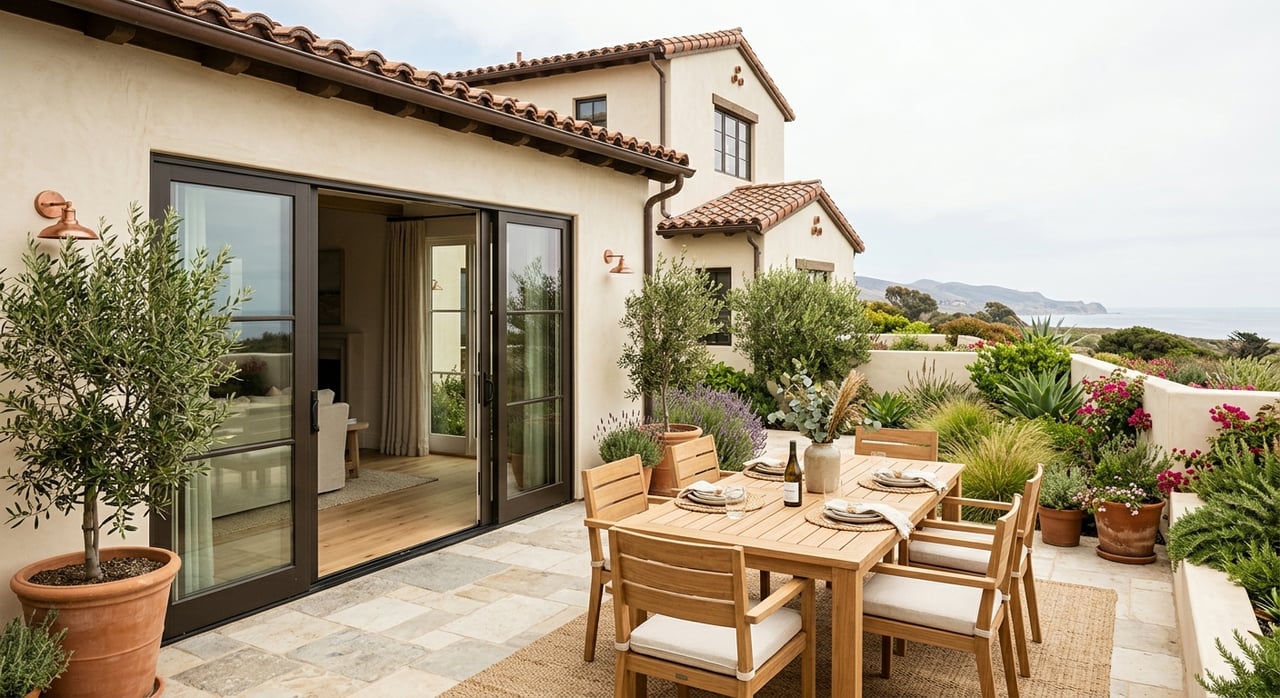
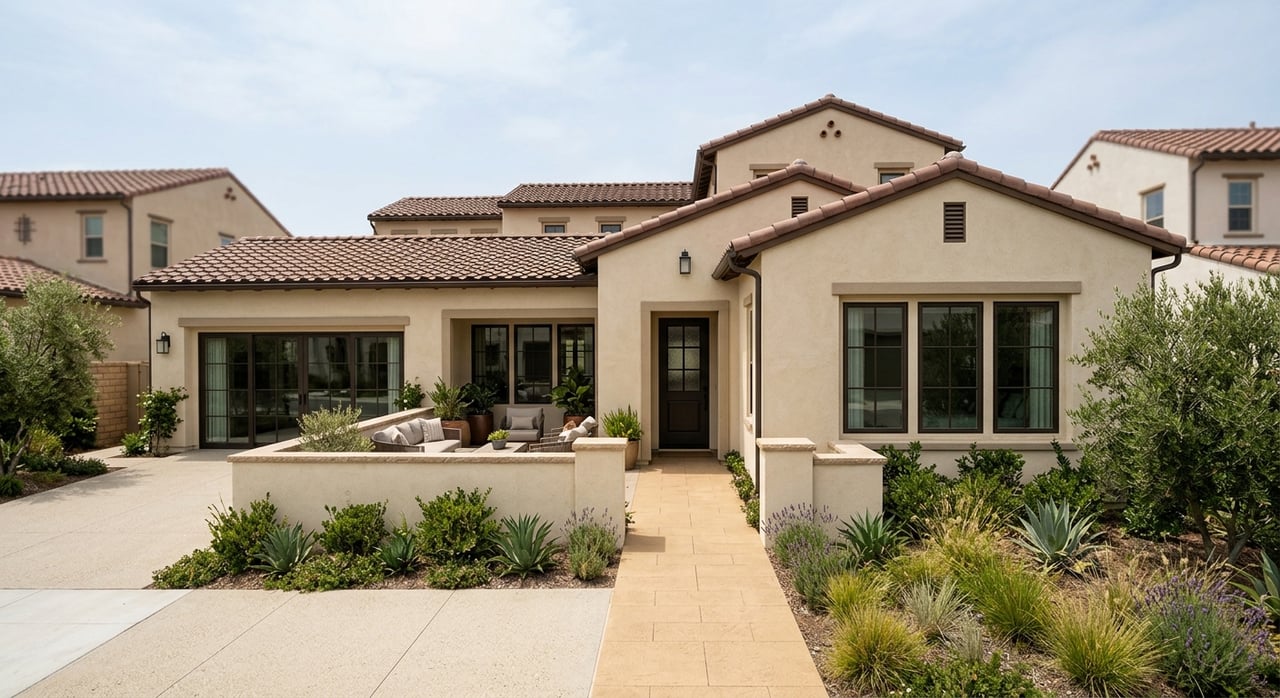
Newer does not necessarily mean ultra-modern in San Juan Capistrano. In Pacifica San Juan, farmhouse- and Craftsman-style exteriors show how planned communities often borrow from traditional forms rather than going fully contemporary.
The Farm’s guidelines also emphasize pitched roofs, verandas, porches, detached garages, and roof articulation. So even in newer neighborhoods, there is often an intentional effort to reflect local architectural themes while maintaining a cohesive, managed look.
Historic vs. Newer: Key Differences
Character and appearance
Historic neighborhoods usually offer more architectural variety and a stronger sense of original place. Materials, proportions, and streetscapes often feel unique, and homes may carry details that are difficult to recreate today.
Newer neighborhoods tend to feel more uniform. Planned setbacks, garage placement, internal trails, and association-managed landscaping all contribute to a cleaner, more coordinated appearance.
Maintenance and ownership experience
Older homes often come with more hands-on upkeep. In historic areas, that may also include city review for certain exterior changes, which can affect timelines and project planning.
Newer communities usually shift some of that burden into HOA dues and neighborhood standards. That does not make them maintenance-free, but it often means fewer preservation-related surprises and more consistency in how the community is maintained.
Parking and access
Parking can be one of the biggest practical differences. In the historic core, especially around Los Rios, limited parking and tighter streets are part of the experience.
In newer planned neighborhoods, the layout is typically more structured around garages, planned streets, and a car-oriented daily routine. If ease of parking matters to you, that can be a meaningful point in the comparison.
Lifestyle and pace
Historic neighborhoods often appeal to buyers who value charm, walkability, and living close to San Juan Capistrano’s traditional town center. The experience can feel more rooted in the city’s older architectural fabric.
Newer communities often appeal to buyers who want a more predictable setup, shared amenities, and a neighborhood plan that supports convenience. Neither is automatically better. It depends on how you want to live day to day.
Commuting and Getting Around
Historic core transit advantages
San Juan Capistrano is served by roadways, rail service, and trails, and Interstate 5 has long provided access to the community. The city is also linked to the Los Angeles-San Diego corridor by commuter rail, with the San Juan Capistrano station located in the Historic Town Center.
That makes the historic core the most transit-connected part of town in practical terms. It is also where summer weekend and special-event trolley service can improve local circulation during the season.
Newer communities and car-oriented access
Newer neighborhoods may still offer internal trails and well-planned circulation, but the city’s circulation framework remains largely vehicle-oriented. For many buyers, that means newer communities may pair neighborhood amenities with easier freeway-focused routines.
If your commute depends on rail access or you want to stay closer to the traditional downtown area, the historic core may stand out. If your routine is mostly built around driving, newer planned neighborhoods may feel more intuitive.
Which Option Fits You Best?
Historic neighborhoods may fit if you want
- Distinct architectural character
- Proximity to the historic town center
- A more walkable daily feel
- Older homes with original materials and details
- A homeownership experience that values preservation and restoration
Newer neighborhoods may fit if you want
- More standardized construction
- Planned amenities like parks, trails, pools, or club facilities
- HOA-managed common areas
- More predictable neighborhood design
- A lower likelihood of preservation-related approval hurdles
A smart way to compare homes in San Juan Capistrano
When you tour homes in San Juan Capistrano, try to look beyond square footage and finishes. Pay attention to how each area handles parking, maintenance, exterior changes, neighborhood appearance, and commuting options.
That is often where the real difference shows up. A charming historic home and a newer planned-community property can both be great choices, but they deliver very different day-to-day experiences.
If you are weighing the trade-offs in San Juan Capistrano, working with advisors who know South Orange County block by block can make the process much easier. The team at Zoch Real Estate Group can help you compare neighborhoods, understand lifestyle differences, and make a confident move.
FAQs
What makes historic neighborhoods in San Juan Capistrano different from newer ones?
- Historic neighborhoods usually offer older architectural character, more varied home styles, and added preservation rules, while newer neighborhoods tend to offer more standardized homes, planned amenities, and HOA-managed common areas.
Are most homes in San Juan Capistrano actually historic?
- No. The city’s 2014 Housing Element reported that about 96% of housing units were built after 1960, while only about 1% were built before 1940.
What should buyers know about the Los Rios Historic District in San Juan Capistrano?
- Los Rios is one of the oldest residential districts in California and offers strong historic character, but buyers should also expect tighter parking, a residential setting, and more limits on certain exterior changes.
Do newer San Juan Capistrano neighborhoods have more amenities?
- Many newer planned communities do. Examples in the city include features such as trails, parks, club facilities, pools, spas, and association-maintained common areas.
Is the historic core of San Juan Capistrano better for commuting?
- It may be a better fit if you want closer access to rail service, since the San Juan Capistrano train station is in the Historic Town Center. Newer neighborhoods are often more oriented around driving and freeway access.
Are exterior changes harder to make on historic homes in San Juan Capistrano?
- They can be. For designated landmarks, the city requires Site Plan Review for changes such as alterations, additions, relocation, or demolition, which can add review steps to the process.