Wondering if you can downsize in San Juan Capistrano without giving up the community you know so well? You are not alone. Many longtime owners here have built substantial equity, but may want less upkeep, fewer stairs, or a simpler day-to-day routine. The good news is that downsizing does not have to mean leaving town. With the right plan, you can stay close to familiar streets, friends, and routines while moving into a home that fits this next chapter better. Let’s dive in.
Why downsizing stays local here
San Juan Capistrano is the kind of place where people tend to put down roots. Census data estimates the city had 35,119 residents in 2025, with 21.5% of residents age 65 or older and an owner-occupied housing rate of 81.0%. That matters because it points to a large number of longtime homeowners who may now be thinking about trading space for simplicity.
There is also a strong equity story behind that decision. The Census reports a median owner-occupied home value of $993,800, while more recent market snapshots show prices trending much higher in current listings and sales. Redfin reported a median sale price of about $1.7 million for the three months ending May 2026, and Realtor.com reported a median listing price of $2.2 million with 128 active properties. Those figures are directional, not identical, but they suggest many owners may have meaningful value built into their homes.
San Juan Capistrano offers real right-sizing options
One reason downsizing can work locally is that San Juan Capistrano has a varied housing mix. According to SCAG, 54.1% of homes are single-family detached, 19.4% are single-family attached, 6.8% are multifamily 2 to 4 units, 8.6% are multifamily 5 or more units, and 11.1% are mobile homes. That range gives you more than one path if your goal is to stay in the same city.
For many homeowners, the right move is not about finding the smallest home possible. It is about finding a home that supports how you want to live now. That could mean fewer stairs, less yard work, easier parking, more practical storage, or simply a layout that feels more manageable.
Single-level detached homes
A single-level detached home can be a strong option if you want to keep privacy and a familiar single-family feel. You may still have your own lot and more separation from neighbors, but with a layout that can be easier to navigate day to day. For some homeowners, this is the closest match to their current lifestyle with less physical strain.
Attached homes and condos
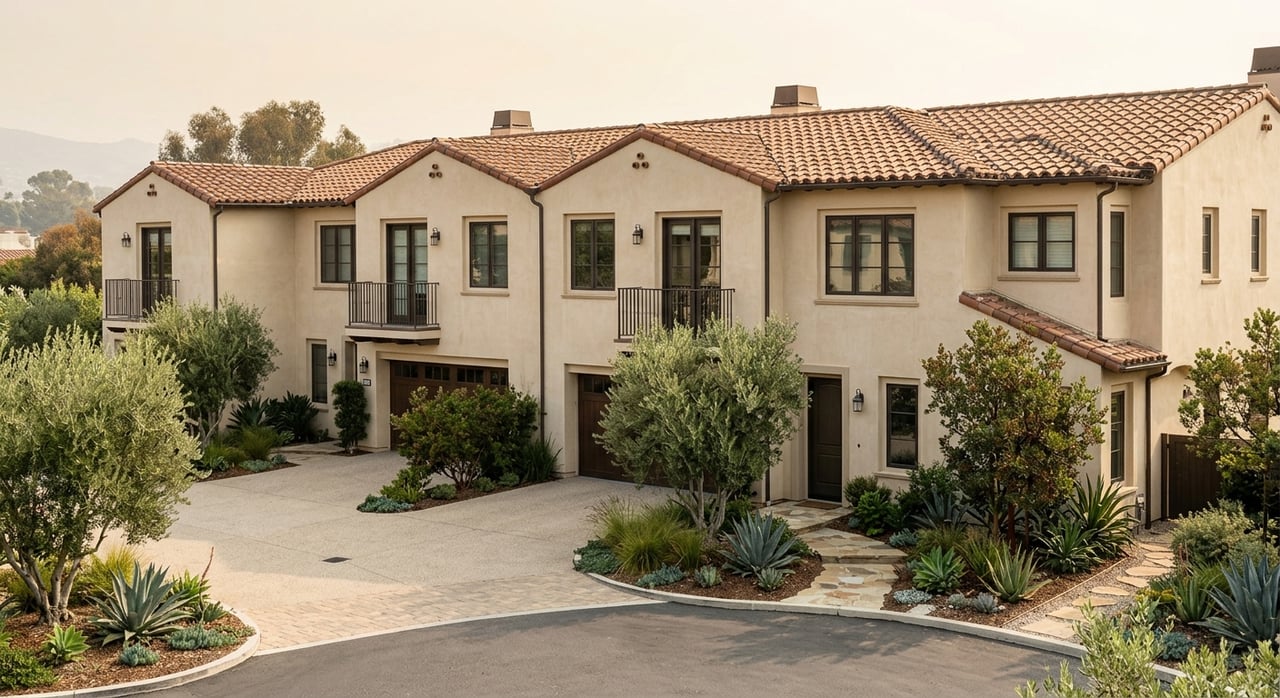
Attached homes like townhomes or condos can reduce exterior maintenance and yard work. If your current home feels too large or too labor-intensive, this type of move can simplify your routine without taking you out of San Juan Capistrano. It can also free up time and energy for travel, hobbies, or spending time with family.
Smaller single-family homes
A smaller detached home can be the middle ground. You keep a private-lot lifestyle, but step away from the scale, upkeep, and expense of a larger family home. For many sellers, this feels like right-sizing rather than giving something up.
What downsizing really means
Downsizing is often described in terms of square footage, but that is only part of the story. The better question is whether your next home will make daily life easier. A home can be smaller on paper and still work better because of its layout, condition, or lower maintenance needs.
As you compare options in San Juan Capistrano, it helps to think through a few practical criteria:
- How many stairs do you use every day?
- How much yard or exterior maintenance do you want to handle?
- Do you need a guest room, office, or hobby space?
- How much storage do you actually use?
- Is parking easy for you and your visitors?
- Do you want a lock-and-leave setup for travel?
- Would a smaller lot improve your routine?
These questions can help you focus on lifestyle fit, not just price or square footage.
Prop 19 can change the math
If you are age 55 or older, Proposition 19 is one of the most important rules to understand before you move. The California State Board of Equalization says eligible homeowners can transfer the base year value of their principal residence to a replacement primary residence anywhere in California. That can make a local move much more attractive if you want to keep your property taxes more manageable.
Prop 19 can apply when the replacement home is of equal or lesser value. It can also apply when the replacement home costs more, with the difference added to the transferred value. The replacement home must be purchased or newly built within two years of the sale, and the claim must be filed within three years of the purchase or completion date.
Another detail many people miss is ownership structure. The Board of Equalization says the claimant does not have to be the sole owner of the replacement home. If you are considering taking title with an adult child or another person, that point may matter as you plan your move.
Budget for taxes after closing
A downsizing move is not only about sale price and purchase price. You also need to prepare for what happens after closing. In Orange County, the Assessor explains that a sale or other reassessable change in ownership usually creates a new base-year value and a Notice of Supplemental Assessment.
Supplemental taxes are prorated from the transfer date through June 30, and they are often billed outside escrow. That means you should not assume every tax-related cost is settled at closing. Depending on timing, a sale can even generate one or two supplemental assessments, so building that into your budget can help you avoid surprises.
The Orange County Assessor also notes that new owners may receive several pieces of paperwork after closing, including:
- A Change of Ownership Statement
- A Homeowner's Exemption application
- A Notice of Supplemental Assessment
- A Supplemental Property Tax Bill
If the ownership change happens between January 1 and May 31, the property tax calendar can trigger two supplemental assessments. That is one more reason a clear transition plan matters.
Do not overlook the Homeowners' Exemption
If your replacement home will be your principal residence, the Homeowners' Exemption is worth remembering. Orange County says it can save at least $70 per year by exempting $7,000 of assessed value for an owner-occupied principal residence. It is not a huge number, but it is still money you should claim if you qualify.
New owners usually receive an application within 90 days after the deed is recorded. The full filing deadline is February 15, and a partial exemption may still be available if you file between February 16 and December 10. If you later move out and rent the home, the exemption must be canceled.
Your home sale may have capital gains implications
Many longtime owners in San Juan Capistrano have seen major appreciation over the years. That is great news for equity, but it also means you should think about potential gain on the sale. The IRS says a home-sale gain is generally eligible for exclusion if you owned the home for at least 24 months and used it as your main residence for at least 24 months during the five years before the sale.
The exclusion can generally shelter up to $250,000 of gain for single filers or $500,000 for many married couples filing jointly. Whether that fully covers your gain depends on your numbers, but it is an important part of the overall downsizing picture when you are estimating how much equity you will keep.
Timing your sale and next purchase
The biggest stress point for many downsizers is timing. Do you sell first and know exactly how much equity you have? Or buy first so you can move once and avoid temporary housing? There is no one answer that works for everyone.
Consumer guidance cited in the research suggests sellers in a seller's market often sell first, while buyers in a buyer's market may buy first. Buying before selling can help you avoid a gap between homes, but it can be harder to qualify for a new mortgage while your current mortgage still counts. Selling first can reduce the risk of carrying two mortgages, but it may require temporary housing or storage.
One bridge option is a rent-back agreement. In that setup, you close the sale and then temporarily rent the home back from the buyer until your next home is ready. For some San Juan Capistrano sellers, that creates a smoother transition and more breathing room.
A practical downsizing plan
A successful move usually starts with clarity, not urgency. Before you list your current home or tour replacements, it helps to map out the financial and timing pieces together. That way, your decision is based on the full picture.
A practical plan often includes these steps:
- Estimate your likely sale proceeds.
- Identify your must-haves in a replacement home.
- Review whether Prop 19 may apply to your move.
- Budget for moving costs, closing costs, and possible supplemental taxes.
- Decide whether selling first, buying first, or using a rent-back makes the most sense.
- Watch filing deadlines for your tax and exemption paperwork.
This kind of planning can turn a stressful idea into a manageable strategy.
Why local guidance matters
Downsizing in San Juan Capistrano is not just a transaction. It is a lifestyle decision tied to timing, taxes, equity, and the question of how you want to live next. In a city where many owners have deep roots and substantial value in their homes, getting the sequence right can make a big difference.
If you are weighing a move, a local strategy can help you compare options within the community instead of assuming you need to leave it. From evaluating likely sale proceeds to identifying the right replacement-home category, thoughtful planning can help you simplify without starting over.
If you are thinking about downsizing in San Juan Capistrano and want a local, high-touch plan for selling and finding the right next home, connect with Zoch Real Estate Group. Their boutique South Orange County approach can help you move with clarity and confidence.
FAQs
What does downsizing in San Juan Capistrano usually mean?
- Downsizing in San Juan Capistrano often means moving from a larger long-held home into a property with less upkeep, fewer stairs, a smaller lot, or a simpler layout while staying in the same community.
What types of downsizing homes are available in San Juan Capistrano?
- San Juan Capistrano's housing mix includes single-level detached homes, attached homes such as townhomes or condos, smaller single-family homes, multifamily options, and mobile homes, which gives local owners several ways to right-size without leaving the city.
How does Prop 19 work for San Juan Capistrano homeowners age 55 or older?
- Under California's Prop 19, eligible homeowners age 55 or older can transfer the base year value of a principal residence to a replacement primary residence anywhere in California if timing and filing requirements are met.
What is the deadline to use Prop 19 for a replacement home in California?
- The California State Board of Equalization says the replacement home must be purchased or newly built within two years of the sale, and the claim must be filed within three years of the purchase or completion date.
Will Orange County send tax bills after a San Juan Capistrano home sale?
- Yes. The Orange County Assessor says a reassessable change in ownership usually creates a Notice of Supplemental Assessment, and supplemental taxes are often billed outside escrow after closing.
What is the Homeowners' Exemption for an Orange County replacement home?
- Orange County says the Homeowners' Exemption can save at least $70 per year by exempting $7,000 of assessed value for an owner-occupied principal residence, with full and partial filing windows depending on timing.
Should you sell first or buy first when downsizing in San Juan Capistrano?
- It depends on your finances, market conditions, and comfort with temporary housing, because selling first can avoid carrying two mortgages while buying first may reduce the chance of a move gap.
What is a rent-back agreement when selling a San Juan Capistrano home?
- A rent-back agreement is a temporary arrangement where you close the sale of your current home and then rent it back from the buyer for a set period while your next home is being prepared or purchased.
Can you still owe capital gains tax after selling a San Juan Capistrano home?
- Possibly. The IRS says qualifying homeowners may generally exclude up to $250,000 of gain if single or up to $500,000 for many married joint filers, but whether that covers your full gain depends on your specific numbers.