Wondering whether a condo or townhome is the smarter move in San Juan Capistrano? If you love the idea of lower-maintenance living but do not want to give up comfort, location, or long-term value, this is a decision worth slowing down for. In a market where detached homes still dominate and prices remain high, attached homes can offer a different path, but they come with their own rules, costs, and trade-offs. Here is how to think through it with confidence. Let’s dive in.
Why attached homes matter here
San Juan Capistrano is still largely a detached-home market, but condos and townhomes are an important part of the local housing mix. The city’s housing planning framework continues to support a variety of housing opportunities, and the current housing element reflects that broader goal. Historically, single-family detached homes made up 53.9% of the city’s housing stock, so attached housing is present, just not the dominant format.
That matters because your choices here are shaped by both local planning and local inventory. If you are looking for a lower-maintenance option in San Juan Capistrano, you are not stepping outside the market. You are simply choosing a different ownership and lifestyle model within it.
Condo vs. townhome basics
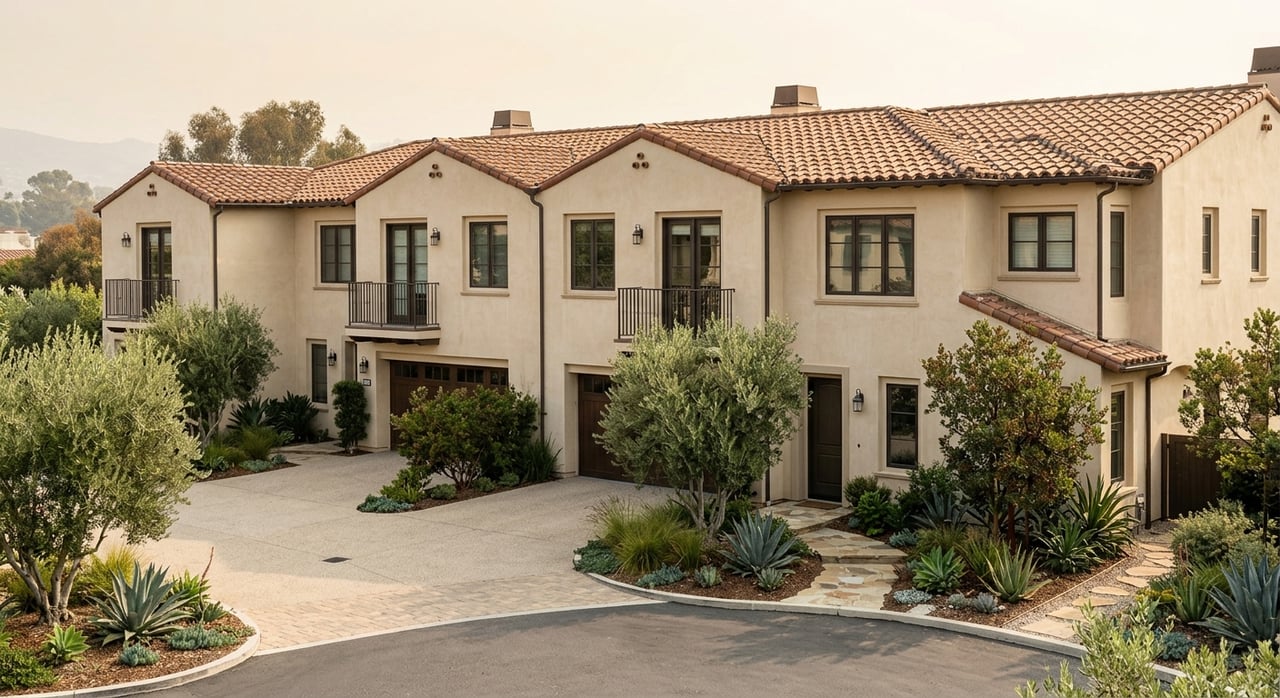
A condo or townhome is not just about how a home looks from the street. In California, the legal structure matters just as much as the floor plan or architecture. A property that appears detached may still legally be a condominium or part of a planned development.
That is why you should avoid making assumptions based on appearance alone. Two homes with similar layouts can have very different ownership rights, maintenance obligations, and HOA rules. Before you fall in love with the design, make sure you understand exactly what you are buying.
What a condo usually means
In a condominium setup, you typically own the interior space of your unit while common areas are owned or managed collectively through the homeowners association. Those common areas may include landscaping, walkways, recreational areas, parking areas, or shared building components. The exact split depends on the governing documents.
What a townhome usually means
A townhome may give you more direct responsibility for parts of the exterior, but that is not guaranteed. In California common interest developments, maintenance duties can vary a lot from one community to another. Roofs, siding, patios, fences, driveways, and landscaping may be handled by the HOA, the owner, or some combination of both.
The price trade-off in San Juan Capistrano
For many buyers, the biggest reason to consider a condo or townhome in San Juan Capistrano is price. Current market data show a meaningful gap between attached and detached housing in the city. The median sale price for a single-family home is about $2,018,973, compared with about $1,149,564 for a condo or co-op and about $1,030,202 for a townhouse.
That does not mean attached homes are cheap. San Juan Capistrano is still a premium market, and even the lower-priced entry points are expensive by national standards. The real comparison is usually not budget housing versus luxury housing. It is often lower-maintenance living and shared amenities versus more control and more private space.
Inventory is still limited
Inventory can also shape your decision. Recent data showed 28 condos and 6 townhouses for sale in one month, which is a fairly limited supply. If you are serious about this property type, it helps to be clear on your priorities early.
In practice, that means knowing which trade-offs you can accept before you start touring homes. When inventory is tight, being decisive matters, but so does understanding the HOA and maintenance picture before you move forward.
HOA living: the biggest factor
If you are considering a condo or townhome in San Juan Capistrano, the HOA deserves as much attention as the home itself. In California, common interest developments are governed by the Davis-Stirling Common Interest Development Act. HOA membership transfers with the property, and the HOA manages common areas and enforces the community’s governing documents.
This is where attached-home living can feel either convenient or restrictive, depending on your personality and goals. Some buyers love having shared maintenance and amenities handled for them. Others find the rules and ongoing dues less appealing.
What your monthly dues may cover
HOA dues often support:
- Common area maintenance
- Landscaping
- Insurance for covered common components
- Recreation facilities and amenities
- Administrative costs
- Reserve funding
- Contingency expenses
You should also know that regular assessments can increase, subject to California rules and limits. Special assessments may also happen, again within statutory limits unless member approval is required.
Amenities can be a real benefit
Attached communities may offer features that would be expensive to maintain on your own. Depending on the project, that can include pools, recreation centers, cabanas, tennis or volleyball courts, trails, open play areas, nature areas, and landscaped spaces. San Juan Capistrano’s own development rules also tie some recreational facilities and landscaping obligations to HOA management.
If you value convenience and a more lock-and-leave lifestyle, these shared amenities can be a major plus. If you know you will rarely use them, you may not want to pay for them every month.
Maintenance is not one-size-fits-all
One of the biggest mistakes buyers make is assuming every condo or townhome community works the same way. It does not. In one project, the HOA may cover the roof, exterior paint, and landscape care. In another, you may be responsible for more of those items yourself.
That is especially important in townhome-style communities, where the line between private and shared responsibility can get blurry. A townhome is not automatically a low-obligation property just because the units are attached. The real answer is always in the governing documents.
Documents you should review carefully
Before you buy, pay close attention to:
- CC&Rs
- Bylaws
- Community rules
- HOA budget
- Reserve information
- Any public report disclosures tied to the project
These documents can tell you how the community operates, what the dues fund, what restrictions apply, and whether the association appears financially prepared for future repairs.
Who condo or townhome living may suit best
The right fit often comes down to lifestyle. In San Juan Capistrano, condos and townhomes can make a lot of sense for buyers who want to be in the market without taking on the full cost and upkeep of a detached home. That can apply to several kinds of buyers.
First-time buyers
If you are entering the San Juan Capistrano market for the first time, attached homes may offer a lower purchase price than a detached home. That can open doors that might otherwise feel out of reach. You still need to budget carefully for monthly dues and the possibility of future assessments.
Downsizers
If you want less yard work and fewer exterior chores, a condo or townhome may be a practical next step. San Juan Capistrano has a notable share of residents age 65 and over, and lower-maintenance housing can appeal to buyers who want simplicity without leaving the area.
Investors and landlords
For some investors, attached homes can be appealing because they may offer turn-key living in a high-value market. But the property’s use is still shaped by the governing documents. If you are buying with rental goals in mind, community-specific rules should be reviewed closely before purchase.
Buyers who want more autonomy
If you want maximum flexibility, a large private yard, or broad freedom to change the exterior, a detached home may still be the better fit. HOA rules can affect exterior modifications, amenity use, and other day-to-day decisions. If that sounds frustrating now, it may feel even more frustrating after closing.
Questions to ask before you buy
The smartest condo and townhome buyers look beyond the listing photos. They ask detailed questions about costs, responsibilities, and the health of the HOA. That extra work can help you avoid expensive surprises.
Here are some of the most useful questions to ask:
- What do the monthly dues cover?
- How strong are the reserves?
- Has the community had special assessments?
- Is there any sign of deferred maintenance?
- Who maintains the roof, siding, fences, patios, driveways, and landscaping?
- What do the CC&Rs and rules say about property use and approvals for changes?
- For newer or conversion projects, what does the public report disclose about title, assessments, and common-area responsibilities?
If you can answer those questions clearly, you will be in a much better position to judge whether a specific community fits your lifestyle and budget.
So, is it right for you?
In San Juan Capistrano, condos and townhomes can be a strong option if you value convenience, shared amenities, and a lower entry price than many detached homes. They are often a practical fit for buyers who want less upkeep and do not mind living within a structured community framework. In the right community, that trade can feel well worth it.
At the same time, this choice is not just about price per square foot. It is about how you want to live day to day, how much control you want over the property, and how comfortable you are with dues, rules, and shared decision-making. The best choice is the one that fits both your budget and your lifestyle.
If you are weighing condo, townhome, or detached-home options in San Juan Capistrano, Zoch Real Estate Group can help you compare communities, review the trade-offs, and make a move that feels right for you.
FAQs
Is a condo cheaper than a house in San Juan Capistrano?
- Current market data show attached homes are generally priced below single-family homes in San Juan Capistrano, but they are still expensive and usually come with HOA dues.
Is a townhome the same as a condo in California?
- Not necessarily. In California, condo and townhome can refer to legal ownership structures and maintenance arrangements, not just how the property looks.
Do San Juan Capistrano condos and townhomes always have an HOA?
- If the property is part of a California common interest development, it will have an HOA that manages common areas and enforces the governing documents.
What should you review before buying a condo or townhome?
- You should review the CC&Rs, bylaws, rules, HOA budget, reserve information, and any available public report disclosures for the community.
Are townhomes lower maintenance than detached homes?
- They can be, but not always. Maintenance responsibilities vary by community, so you need to confirm which items the HOA handles and which ones you handle yourself.