Thinking about buying a horse property in South Orange County? San Juan Capistrano stands out because it offers more than a rural look or a larger lot. If you want a home that supports daily riding, horse care, and trail access, this city gives you a rare mix of open space, equestrian infrastructure, and local culture. Let’s dive in.
Why San Juan Capistrano stands out
San Juan Capistrano has a strong equestrian foundation built into the city itself. According to city information, it includes 43 miles of unpaved hiking, mountain, and equestrian trails, about 20 miles of paved bikeways, 230 acres of agricultural land, 52 acres of developed parks, and more than 3,000 acres of permanent open space within 14 square miles.
That matters because the equestrian lifestyle here is not limited to a few isolated properties. A 2024 Planning Commission report describes the city as supporting private recreation, equestrian centers, and the continuation of equestrian stables and support facilities as part of its rural character and quality of life. In other words, horse use is an active part of how the city plans for the future.
The city has also made land-use decisions that reinforce that identity. In 2024, the Mission Trails property was approved for continued equestrian stable operations in perpetuity. For buyers, that is a meaningful sign that equestrian use remains part of San Juan Capistrano’s long-term vision.
Why trail access matters
In San Juan Capistrano, trail access can be just as important as square footage. The city’s Parks & Recreation Element says the trail system is built around San Juan, Trabuco, and Oso Creeks, with General Plan trails serving as main routes and feeder trails connecting equestrian-zoned neighborhoods.
That setup helps explain why two properties with similar lot sizes can offer very different experiences. One may have easier access to riding loops and open space, while another may feel more like a standard residential parcel with room around it. If horseback riding is part of your everyday lifestyle, direct connection to the trail network can shape how useful a property really is.
It also helps to remember that these trails are part of a broader shared-use system. The city says the trail network currently allows different types of bicycles, including e-bikes, and continues to evaluate safety policies. So when you tour homes, think beyond proximity and ask how the nearby trail experience fits the way you plan to ride.
What makes a home horse-friendly
A horse-friendly home usually needs more than land alone. UC Cooperative Extension guidance points to practical factors like soil, drainage, forage, manure planning, dust control, and protection of trees and fences. A property can look ideal on paper but still fall short if the layout does not support daily horse care.
As you evaluate homes, look at how the parcel actually functions. Ask yourself whether horses can move safely between stalls, turnout, wash areas, and trailer access without awkward bottlenecks or poor footing. Daily use matters more than a simple lot-size number.
Common features you may see include:
- Secure fencing and gates
- Stall or barn space
- Turnout areas or paddocks
- Arena or round pen space
- Wash areas
- Tack storage
- Trailer access
- Manure storage or compost space
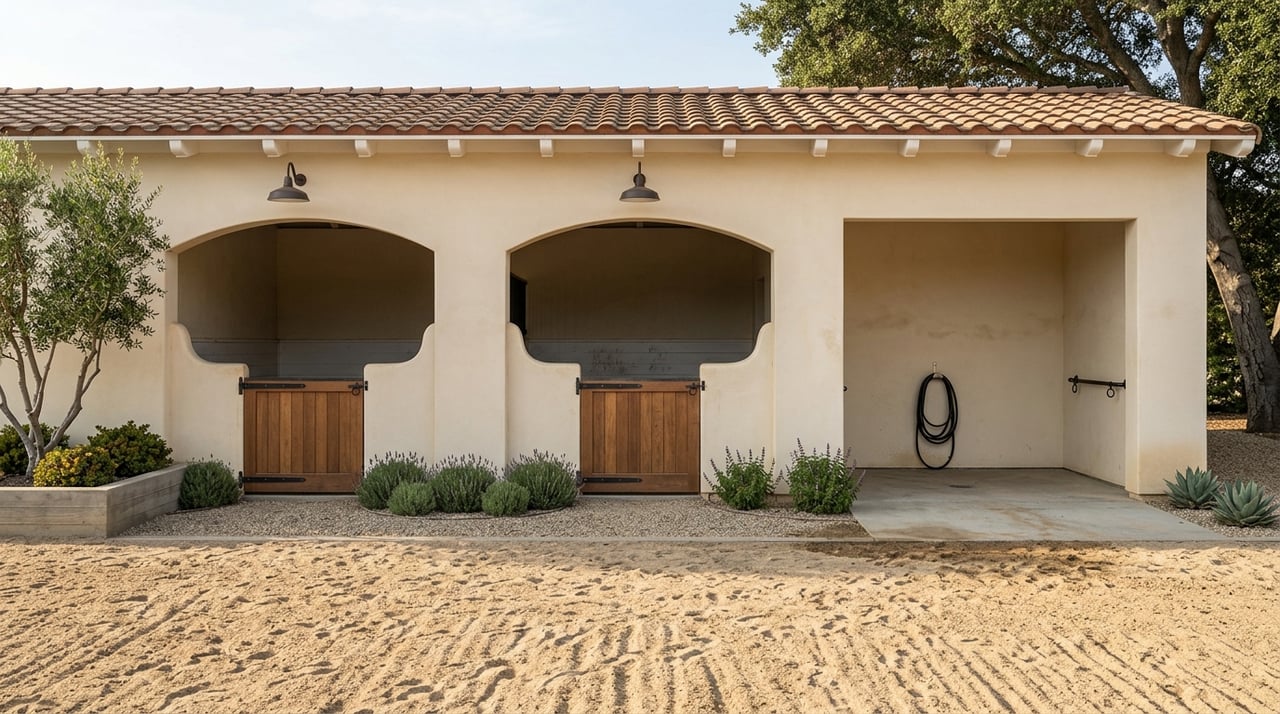
Some properties are lightly improved, while others are much more built out. Local facilities in the area illustrate what a more developed equestrian setup can include, such as box stalls, covered stalls, arenas, round pens, wash racks, tack sheds, and additional training infrastructure. That is a helpful reminder that not every large residential lot is truly ready for horses.
Lot size is only part of the story
Buyers often start by asking how big the lot is. In San Juan Capistrano, the better question is whether the property is configured for horse use and connected to the right infrastructure. The city’s planning documents note that feeder trails serve equestrian-zoned neighborhoods, while many HOA communities focus instead on amenities like pools, courts, and parkland.
That distinction is important if you are relocating from outside the area. A home may offer privacy, views, or generous outdoor space but still not support the horse lifestyle you have in mind. The parcel’s shape, circulation, access, and trail relationship can matter just as much as acreage.
Riding amenities beyond your property
One reason San Juan Capistrano appeals to horse buyers is that the lifestyle works even beyond your own lot lines. The city describes itself as an equestrian destination because of its concentration of horses, stables, and riding facilities. That gives you access to a larger riding ecosystem, not just private ownership opportunities.
The Rancho Mission Viejo Riding Park is a public park in San Juan Capistrano that hosts equestrian events and includes a walking and riding trail. The Shea Center says the trails behind its barn are part of the city trail system, with some jointly maintained by the City and The Shea Center.
Private riding and training options also add depth to the local experience. Bridges Equestrian offers lessons, training, camps, and shows, with programs ranging from beginner to competitive riders. Gladstone Equestrian has operated in the city for more than four decades and offers private and group lessons, training and care, competition shows, and summer camps.
Other facilities highlight the value of boarding and trail connection. Shady Maples Farm says it is within the San Juan Capistrano trail system and offers immediate access to many miles of trail riding, along with training across several riding disciplines. For buyers, this means your lifestyle options may include at-home horse keeping, boarding nearby, or a hybrid approach depending on the property.
Upkeep questions to ask early
Horse properties come with a different level of due diligence than a typical single-family home. Drainage and water management should be near the top of your list. The city’s floodplain resources direct owners to FEMA flood maps and USGS flow data for San Juan Creek and Trabuco Creek, and UC ANR recommends reviewing soil type, runoff from surrounding slopes, and proximity to creeks and wells.
This is especially relevant in a city where creek corridors and trails are part of the landscape. A property near open space may feel ideal for riding, but you still want to understand how water moves across the site and whether drainage supports year-round use.
Manure and dust management also deserve careful attention. UC ANR says proper manure handling can reduce waste volume, removal costs, fly breeding, and neighbor complaints. It recommends regular cleanout of stalls and paddocks, storage away from creeks and wells, and dust control practices such as maintaining vegetation and sprinkling arenas or paddocks during dry periods.
Safety and emergency planning matter
Emergency readiness is a practical part of horse ownership in San Juan Capistrano. The city says local hazards can include earthquakes, flooding, landslides, and wildfire, and it advises residents to be self-sufficient for at least three days and to know evacuation routes.
For horse owners, the city’s Large Animal Response Team guidance adds another layer. It recommends keeping veterinary information on hand, maintaining animal identification, practicing trailer loading, and arranging an evacuation site outside the immediate area before an emergency happens.
Fire planning is especially important for acreage buyers. The city says CAL FIRE’s updated hazard maps place a much larger portion of San Juan Capistrano in the Very High Fire Hazard Severity Zone, with additional acreage in High and Moderate zones. The city also notes that these maps are planning tools, not insurance determinations, so buyers should separately ask about underwriting, defensible space, and home-hardening.
A smart way to evaluate equestrian homes
When you tour horse properties, it helps to break the decision into a few simple categories. That keeps the process focused on how you will actually live on the property, not just how it looks during a showing.
Use this checklist as a starting point:
- Trail access: Is there practical access to the city trail network or feeder trails?
- Property function: Does the layout support stalls, turnout, trailer movement, and daily horse care?
- Drainage: How does the site handle runoff, slopes, and wet conditions?
- Maintenance needs: Is there a workable plan for manure storage, cleanout, and dust control?
- Emergency planning: What are the evacuation routes and fire-related considerations?
- Lifestyle fit: Do you want horses at home, nearby boarding, or a mix of both?
A well-matched equestrian property should support both the horses and the household. That means balancing riding goals, maintenance demands, safety planning, and the overall feel of the location.
Why local guidance helps
San Juan Capistrano offers a rare mix of preserved equestrian identity, trail infrastructure, open space, and active riding amenities. The key question is usually not whether the city is horse-friendly. It is how much horse infrastructure a specific property can comfortably support and how that matches the lifestyle you want.
If you are comparing options in San Juan Capistrano or relocating to South Orange County, local context can make a real difference. A property’s value is tied not only to the home itself, but also to its access, functionality, and place within the city’s equestrian landscape.
If you are exploring equestrian homes in San Juan Capistrano or planning a move within South Orange County, Zoch Real Estate Group can help you evaluate the lifestyle, location, and property details that matter most.
FAQs
What makes San Juan Capistrano attractive for equestrian homebuyers?
- San Juan Capistrano offers 43 miles of unpaved hiking, mountain, and equestrian trails, more than 3,000 acres of permanent open space, agricultural land, and city planning that continues to support stables and equestrian facilities.
What should you look for in a San Juan Capistrano horse property?
- You should look beyond lot size and focus on trail access, secure fencing, stall or barn space, turnout areas, trailer access, drainage, manure handling, and overall property layout.
Does every large lot in San Juan Capistrano work for horses?
- No. A parcel may appear spacious but still function poorly for horses if it lacks proper drainage, usable circulation, turnout flow, or a workable manure and dust-control plan.
Are there riding facilities in San Juan Capistrano besides private homes?
- Yes. San Juan Capistrano has a broader equestrian network that includes the Rancho Mission Viejo Riding Park, lesson and training barns, boarding options, and trail-connected facilities.
What safety issues should horse buyers consider in San Juan Capistrano?
- Buyers should consider flooding, wildfire, earthquakes, landslides, evacuation routes, trailer readiness, animal identification, and whether the property has a practical emergency plan for horses.
Are San Juan Capistrano trails only for horseback riding?
- No. The city describes the trail system as shared-use open space and says different types of bicycles, including e-bikes, are currently allowed on the trail network.